Posts

Essential Banking Term-Part 1
Image
1.       Financial Institution =A financial institution established under the prevailing laws with the objectives of providing loans for agricultural cooperative, industrial or any other specific economic purpose or of collecting deposits from the general public . 2.       Money = It means all types of currency notes, postal orders, postal notes, money orders, cheques, drafts, traveller’s cheques, letters of credit, bills of exchange, promissory notes and credit cards and this expression also includes similar types of monetary 3.       Currency Note = It means the bank note in circulation in the form of cash and this expression also includes coin . 4.       Foreign Currency = It means the currency other than the Nepalese currency and this expression includes the special drawing rights on the International Monetary Fund, the Asian Currency Units, the European Currency Units and other...
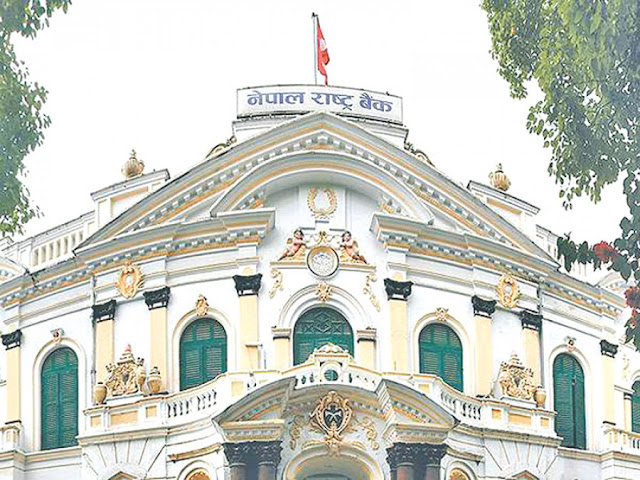
Establishment, Objectives, Functions and Powers of Nepal Rastra Bank

Image
                                                             1. Historical Background Central banking is a recent phenomenon mainly related to 19 th and 20 th centuries, although certain central banking functions were performed by certain institutions in the olden days. The growth of central banks has been very slow. The Riks Bank of Sweden is the earliest bank established in 1656. The bank of England, though founded in 1694, started functioning as the central bank with the passing of the Bank Charter Act, 1882. Other major countries which established central banks in the 19 th century are France (1800), Netherlands (1814), Russia (1860), Germany (1875), Japan (1882), etc. The movement of central banking started in the 20 th century, particularly after the International Financial Conference meeting at Brus...

MACROECONOMIC UPDATE 1 : MONEY SUPPLY (APRIL 2020)

Image
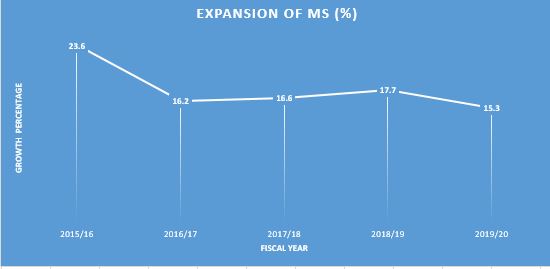
Money plays an important role in an economy and is a key component of the transmission mechanism from monetary policy to economic activity and inflation. Conceptually, the notion of money has been linked to the formulation of monetary policy and the need for money growth to be in line with the desired real growth rate and level of inflation, given an assumption on the velocity of money. Monetary growth can also impact on asset prices in an economy. Money aggregates measure the money available to money-holding sectors in the economy for making purchases of goods, services, nonfinancial assets and financial assets, and are closely monitored by the central bank when determining decisions that affect the short-term policy interest rate and/or the level of the monetary base. The value for broad money (M2)  growth (annual %) in Nepal was 15.30% as of 2019/20. As the graph below shows, over the past five years this indicator reached a maximum value of 23.6 in fiscal year 2015/16 and ...

Variable Cash Reserve Ratio in Underdeveloped Countries

Image
                                                                        1.       Introduction The central bank of a country has the responsibility of controlling the volume and direction of credit in the country. Bank credit has become these days an important constituent of the money supply in the country. The volume and direction of bank credit has, therefore, an important bearing on the level of economic activity. Excessive credit will tend to generate inflationary pressures in the economy, while deficiency of credit supply may tend to cause depression or deflation. Lack of the availability of cheap credit may also hinder economic growth and development. At times of depression, there is a need to expand credit and at times of boom there is need to...